
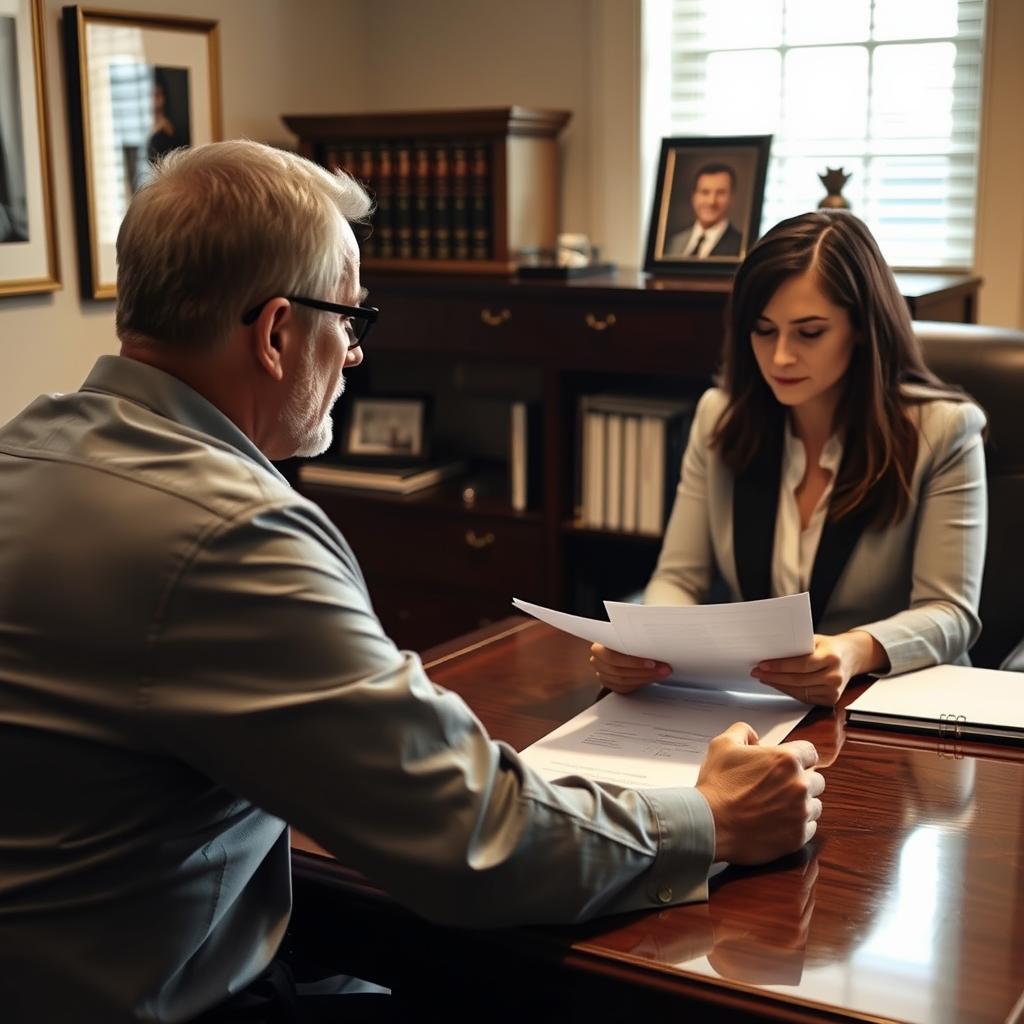
Establish Paternity Lawyer Caroline County, VA
For a parent seeking custody, visitation, or child support in Caroline County, establishing paternity is often the first necessary legal step. Virginia law provides specific procedures for acknowledging or adjudicating the legal father‑child relationship, and the outcome affects parental rights, custody arrangements, and financial obligations for years to come. Law Offices Of SRIS, P.C. Concentrates its practice on family law matters and represents clients in paternity proceedings throughout Caroline County, including the communities of Bowling Green and Carmel Church. Mr. Sris and his Of Counsel understand the interplay between paternity determinations under Va. Code § 20‑49.1 et seq. And the broader issues of custody, visitation, and support. To discuss how a paternity action may apply to your circumstances, reach Law Offices Of SRIS, P.C. at (888) 437‑7747. Law Offices Of SRIS, P.C. – Advocacy Without Borders.
What Establish Paternity Means in Caroline County, Virginia
Establishing paternity is the process of legally determining the father of a child. In Virginia, paternity may be acknowledged voluntarily by both parents or adjudicated by a court. When parents are not married at the time of the child’s birth, a legal father‑child relationship does not automatically exist; paternity must be established before a father can assert custody or visitation rights, and before a court can impose a child‑support obligation. Caroline County family law matters involving paternity are heard in the Caroline County Juvenile and Domestic Relations District Court when they concern custody, support, or protective orders, and in the Caroline County Circuit Court when paternity is raised within a divorce or equitable distribution proceeding. The courthouse is located at 111 Ennis Street, Bowling Green, Virginia 22427.
In a voluntary acknowledgment, both parents sign an Acknowledgment of Paternity form, typically at the hospital or through the Virginia Department of Social Services Division of Child Support Enforcement. That acknowledgment has the same legal effect as a court order once it is properly executed and filed. When there is a dispute or uncertainty, either parent may petition the court to adjudicate paternity. The court can order genetic testing, and the results carry a statutory presumption of paternity if the probability of parentage meets the threshold set by Virginia law. Once paternity is legally established, the court may then address custody, visitation, and child‑support matters. Because Caroline County sits along the I‑95 corridor between Fredericksburg and Richmond, families often have ties to multiple jurisdictions, and a clear paternity determination can streamline interstate recognition and enforcement.
How Mr. Sris and His Of Counsel Handle Establish Paternity Cases
Mr. Sris and his Of Counsel approach each paternity case with the understanding that the legal father‑child relationship carries immediate and long‑term consequences. The firm first evaluates whether paternity has already been acknowledged or must be adjudicated. If a voluntary acknowledgment exists, the focus shifts to custody, visitation, and support. If paternity is contested, the firm guides clients through genetic testing, discovery, and court hearings. Throughout the process, the goal is to protect the client’s parental rights while addressing the best interests of the child under Virginia’s statutory factors.
In Caroline County, paternity petitions are filed in the Juvenile and Domestic Relations District Court when the matter is not part of a divorce. The court schedules an initial hearing, after which it may order DNA testing. Once paternity is determined, the court addresses related issues—often in the same proceeding or through subsequent motions. Mr. Sris and his Of Counsel also handle paternity disputes that arise post‑divorce or in the context of equitable distribution, where marital assets may be affected by a finding that a child is not biologically the husband’s. The timeline for resolving a paternity case varies depending on whether testing is needed, the court’s calendar, and the complexity of the related custody and support issues.
About Mr. Sris and His Of Counsel Team
Mr. Sris, Owner and Founder of Law Offices Of SRIS, P.C., has practiced law since 1997 and is admitted in Virginia, Maryland, the District of Columbia, New Jersey, and New York. He is a former prosecutor and has testified before the Virginia House Courts of Justice Committee in support of 2019 HB 635 (chief patron Del. David Bulova). Mr. Sris and his Of Counsel bring extensive combined legal experience. Results may vary. The Of Counsel attorneys who support the firm’s Caroline County family law work include experienced litigators with backgrounds in criminal prosecution, law enforcement, and complex family law matters. Every attorney on the team is engaged through Excella as Of Counsel.
Clients throughout Caroline County—from Bowling Green to Carmel Church—can schedule a consultation with Mr. Sris and his Of Counsel by contacting the firm’s Fairfax location. The firm’s multi‑state practice allows it to address cross‑jurisdictional issues that frequently arise when families have ties to Maryland, the District of Columbia, or other nearby states.
Frequently Asked Questions
Who can file to establish paternity in Caroline County, Virginia?
Either parent, the child through a guardian or next friend, or the Virginia Department of Social Services may petition the Caroline County Juvenile and Domestic Relations District Court to establish paternity. A mother may seek to establish paternity to obtain child support, while a father may petition to assert custody or visitation rights. The court must have jurisdiction over the child, which generally means the child resides in Virginia. If paternity is contested, the court can order genetic testing, and the results are admissible as evidence under Virginia law. Once paternity is adjudicated, the court can enter orders concerning custody, visitation, and support. For guidance on your specific situation, reach Law Offices Of SRIS, P.C. at (888) 437‑7747.
What are the legal effects of establishing paternity in Virginia?
Establishing paternity creates a legal father‑child relationship that confers parental rights and imposes obligations, including the right to seek custody and visitation and the duty to provide financial support. The father’s name can be added to the child’s birth certificate, and the child may become eligible for benefits such as Social Security, health insurance, and inheritance rights. The legal father also has the right to participate in decisions about the child’s upbringing. Conversely, the father becomes financially responsible for the child, and a child‑support order can be entered. The court retains the authority to modify custody, visitation, and support orders in the future if circumstances change. For a consultation, reach Mr. Sris and his Of Counsel at (888) 437‑7747.
How does the paternity establishment process work in Caroline County courts?
The process begins with a petition filed in the Caroline County Juvenile and Domestic Relations District Court, followed by a hearing where the court may order genetic testing if paternity is disputed. If both parents voluntarily agree, they can sign an Acknowledgment of Paternity, which is filed with the Virginia Department of Social Services Division of Child Support Enforcement and has the same effect as a court order. When paternity is contested, the court schedules a hearing, and DNA test results typically create a presumption of paternity if the probability of parentage meets the statutory threshold. Once paternity is established, the court addresses custody, visitation, and support, often in the same proceeding. To discuss the details of your matter, contact Law Offices Of SRIS, P.C. at (888) 437‑7747.
Can a paternity determination be challenged after it is established?
In Virginia, a paternity determination based on an acknowledgment or a court order may be challenged under limited circumstances, such as fraud, duress, or material mistake of fact, and strict time limits apply. A person seeking to set aside a paternity order must file a motion with the court that issued the original order. The court considers the best interests of the child and whether the challenge is timely. Challenges to voluntary acknowledgments must be brought within a specific statutory period. Because the legal and financial consequences are significant, anyone considering a paternity challenge should consult an attorney promptly. For guidance on your specific situation, reach Law Offices Of SRIS, P.C. at (888) 437‑7747.
How does paternity affect child custody and support in Caroline County?
Once paternity is established, the father gains the right to seek custody and visitation, and the court can enter a child‑support order based on Virginia’s child‑support guidelines. Custody and visitation decisions are based on the best interests of the child, considering the factors set out in Va. Code § 20‑124.3. Child support is calculated using the guidelines in Va. Code § 20‑108.1, which take into account the combined gross income of the parents and the number of children. The court may also address health insurance coverage and medical expenses. In Caroline County, these issues are heard in the Juvenile and Domestic Relations District Court when they are not part of a divorce. For a consultation, reach Mr. Sris and his Of Counsel at (888) 437‑7747.
Other family law services available in nearby localities:
- Fairfax County Family Law Lawyer
- Prince William County Family Law Lawyer
- Fairfax City Family Law Lawyer
- Manassas Family Law Lawyer
Additional resources:
Attorney advertising. Prior results do not guarantee a similar outcome.
Case results depend on a variety of factors unique to each case.
Results may vary.