
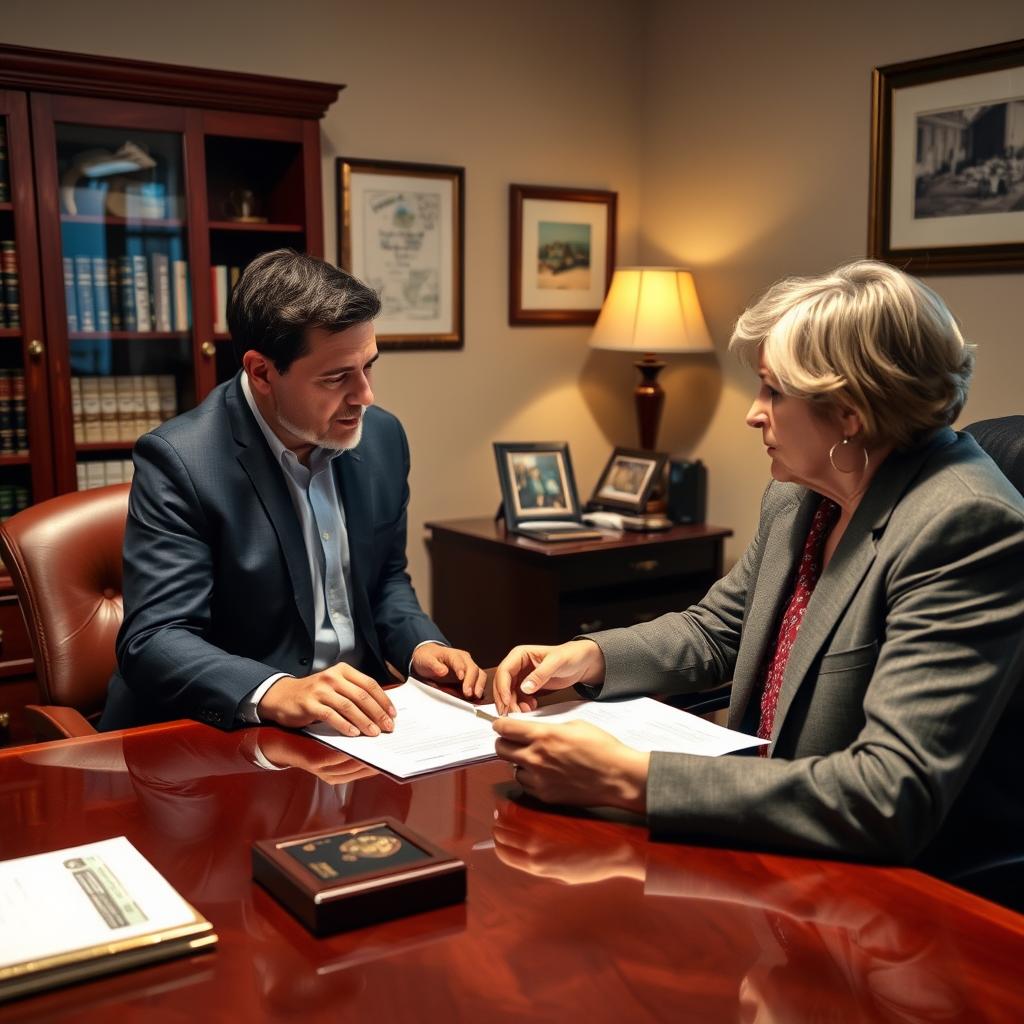
Supervised Visitation Lawyer Rappahannock County, VA
When a Virginia court orders that a parent’s time with a child must be supervised, the emotional and practical stakes are high. A supervised visitation arrangement means that every moment a parent spends with their child takes place in the presence of a third party — usually a professional supervisor or a trusted relative — under conditions set by the Rappahannock County Juvenile and Domestic Relations District Court or the Rappahannock County Circuit Court as part of a custody or visitation proceeding. For families in Washington, Sperryville, Flint Hill, and throughout the 20th Judicial District, navigating these restrictions requires an understanding of Virginia visitation law and the local court procedures that shape how supervised visitation orders are entered, modified, and enforced. Law Offices Of SRIS, P.C. has represented parents in Rappahannock County family law matters since 1997. Mr. Sris, Owner and Founder, and his Of Counsel concentrate on family law issues including supervised visitation, working to protect parental rights while prioritizing the best interests of the child. To discuss your supervised visitation matter, contact Law Offices Of SRIS, P.C. at (888) 437-7747. Law Offices Of SRIS, P.C. — Advocacy Without Borders.
What Supervised Visitation Means in Rappahannock County, Virginia
Supervised visitation is a restriction on a parent’s access to a child that requires all visits to occur in the presence of an approved third party. A Rappahannock County court may impose supervised visitation when it determines that unsupervised time would place the child at risk — for example, where there is a history of family abuse, substance misuse, or a parent has been largely absent from the child’s life and reunification must proceed gradually. The legal framework is rooted in Virginia Code § 20-124.2, which directs the court to ensure frequent and continuing contact with both parents when it serves the child’s best interests, while also authorizing the court to place conditions on visitation when circumstances warrant protection.
In Rappahannock County, the Juvenile and Domestic Relations District Court handles standalone custody and visitation cases, while the Circuit Court addresses visitation within the context of a divorce or equitable distribution proceeding. Both courts sit at 250 Gay Street, Suite 1, Washington, VA 22747. Orders may specify the supervisor — often a professional agency, a relative, or a court‑appointed individual — as well as the location, duration, and frequency of visits. The court’s decision is guided by the ten statutory best‑interest factors listed in Virginia Code § 20-124.3, which include the child’s physical and mental condition, the relationship between the child and each parent, and any history of family abuse. A supervised visitation order is not necessarily permanent; as circumstances change, a parent may seek a modification by demonstrating that the conditions that led to supervision have been resolved.
How Mr. Sris and His Of Counsel Handle Supervised Visitation Cases
Family law matters involving supervised visitation require a careful balance between protecting the child and preserving the parent‑child relationship. Mr. Sris and his Of Counsel approach each Rappahannock County supervised visitation case by first understanding the underlying concerns that prompted the court to impose supervision. They review the allegations, the child’s situation, and any prior court findings. This foundation allows them to present evidence that addresses the court’s concerns directly — whether through testimony, documentation of completed treatment programs, or the recommendation of a qualified professional.
When a parent seeks to obtain supervised visitation for the other parent, the team assembles the factual record needed to support the request. When a parent is the subject of a supervision order, the focus shifts to demonstrating that supervision should be relaxed or lifted entirely. The approach always respects the procedural requirements of the Rappahannock County Juvenile and Domestic Relations Court or Circuit Court and the substantive standards of Virginia Code § 20-124.2. Mr. Sris and his Of Counsel also assist with related issues that often accompany supervised visitation disputes, such as custody modifications, child support adjustments, and protective orders. Throughout the process, they prepare each parent for what to expect during a court hearing and advocate for an arrangement that serves the child’s best interests while safeguarding parental rights.
About Mr. Sris and His Of Counsel Team
Mr. Sris, Owner and Founder of Law Offices Of SRIS, P.C., began practicing law in 1997 after serving as a former prosecutor. His background includes criminal trial work and a deep familiarity with Virginia family law procedures. Mr. Sris testified before the Virginia House Courts of Justice Committee in support of 2019 HB 635 (chief patron Del. David Bulova). He is admitted to practice in Virginia, Maryland, the District of Columbia, New Jersey, and New York, and he concentrates his practice on family law, criminal defense, and immigration matters.
Mr. Sris works alongside a team of Of Counsel — experienced attorneys who are engaged through Excella and who each contribute to the firm’s family law practice. Collectively, Mr. Sris and his Of Counsel bring over 120 years of combined legal experience and have achieved 4,739+ documented firm-wide results. Results may vary. Together, they serve families in Rappahannock County from the Fairfax location at 4008 Williamsburg Court, Fairfax, VA 22032. Every case is handled with attention to the specific needs of the family and the procedural expectations of the local courts.
Frequently Asked Questions
What is supervised visitation in Virginia?
Supervised visitation is a court‑ordered arrangement that requires a third party to be present during a parent’s time with a child. Virginia courts may impose supervision when there is evidence that unsupervised contact could endanger the child’s safety or emotional well‑being. The order will specify the supervisor (a professional agency, relative, or other approved individual) and the conditions under which visits may occur. Supervised visitation orders arise from custody disputes, protective order proceedings, or divorce cases, and the goal is often to facilitate a safe path to reunification while protecting the child.
Why would a court order supervised visitation for a parent in Rappahannock County?
A court may order supervised visitation if it determines that unsupervised time with the parent would not be in the child’s best interests. Common grounds include a history of domestic violence, child abuse or neglect, substance abuse, mental health concerns that affect parenting capacity, or a parent’s prolonged absence from the child’s life. The Rappahannock County Juvenile and Domestic Relations Court evaluates the evidence under Virginia Code § 20-124.3’s best‑interest factors and may impose supervision as a temporary protection while a parent addresses the underlying issues.
How can I request supervised visitation for the other parent in Rappahannock County?
You may request supervised visitation by filing a motion with the Rappahannock County Juvenile and Domestic Relations Court (or Circuit Court if a divorce is pending). The motion must state the reasons why supervision is necessary and include supporting evidence — such as witness statements, police reports, or records of past incidents. An experienced family law attorney can help you prepare the motion, gather documentation, and present your case at the hearing. If the court finds that unsupervised visitation would place the child at risk, it may grant the request and define the terms of supervision.
Can a supervised visitation order be modified or ended?
Yes, a supervised visitation order can be modified or terminated when the circumstances that justified supervision have changed. The parent subject to the order must demonstrate to the Rappahannock County court that the safety concerns no longer exist — for example, by completing a substance abuse program, attending counseling, or maintaining a stable living environment. The court will consider updated evidence and testimony before deciding whether to lift or ease the supervision. A family law attorney can help present the evidence and argue for a modification that serves the child’s best interests.
Do I need a lawyer for a supervised visitation matter?
You are not required to have a lawyer, but supervised visitation disputes involve complex procedural and evidentiary issues that can significantly affect your relationship with your child. An attorney familiar with Rappahannock County family court practices can help you understand the legal standards, gather admissible evidence, and present a persuasive argument. Law Offices Of SRIS, P.C. represents parents in visitation proceedings and can advise you on an appropriate approach for your situation. Contact the firm at (888) 437-7747 to schedule a consultation.
How do I find a supervised visitation lawyer near Rappahannock County?
You can reach a supervised visitation lawyer by contacting Law Offices Of SRIS, P.C. at (888) 437-7747. The firm’s Fairfax location serves families throughout Rappahannock County, including Washington, Sperryville, and Flint Hill. Mr. Sris and his Of Counsel appear regularly in the Rappahannock County Juvenile and Domestic Relations Court and Circuit Court on visitation and custody matters. Call to discuss your case and learn how the firm can assist you.
Primary‑source authority: Virginia Code – Domestic Relations (Title 20) · Virginia Courts · Rappahannock County Courts
Attorney advertising. Prior results do not guarantee a similar outcome.
Results may vary.
Case results depend on a variety of factors unique to each case.