
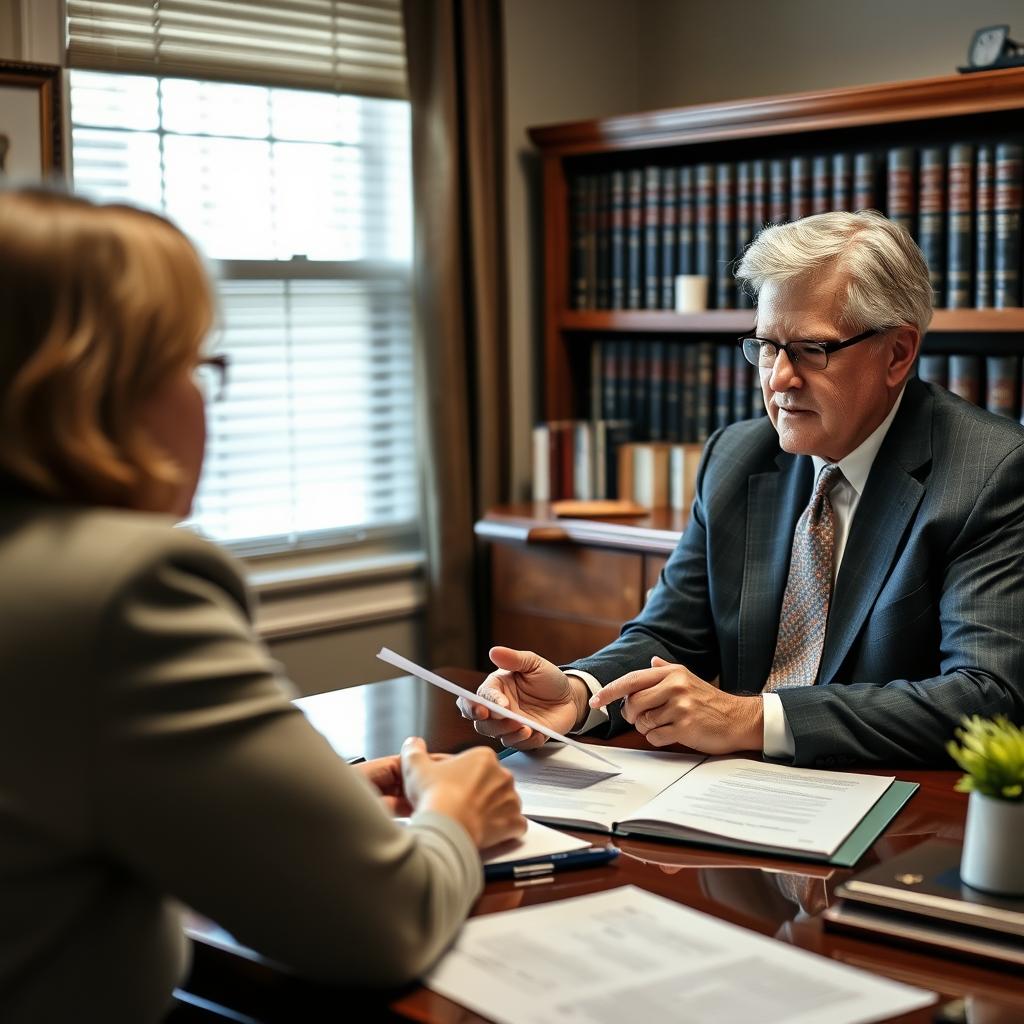
Visitation Lawyer Rappahannock County, VA
When parents live apart, establishing a clear and workable visitation arrangement is often one of the most pressing concerns — both
emotionally and legally. In Rappahannock County, Virginia, visitation is governed by the trusted‑interests‑of‑the‑child standard set out
in Va. Code § 20‑124.3, and the process unfolds in either the Rappahannock County Juvenile and Domestic Relations District Court or,
if linked to a divorce, the Rappahannock County Circuit Court (250 Gay Street, Suite 1, Washington, VA 22747). Mr. Sris, Owner and Founder of Law Offices Of SRIS, P.C., has practiced family law across Virginia since 1997, and he and his Of Counsel bring over 120
years of combined legal experience and 4,739+ documented firm-wide results to visitation matters. Results may vary. Whether you are a parent seeking to establish a parenting-time schedule, a
grandparent pursuing court‑ordered access, or a party needing to modify or enforce an existing order, the firm’s approach is grounded
in a thorough understanding of how the local courts evaluate these cases. The firm handles visitation disputes that range from
straightforward schedule disagreements to highly contested matters involving supervised visitation, relocation, and allegations of
parental unfitness. Because every family’s circumstances differ, each case is evaluated on its own facts, with the goal of reaching a
resolution that respects the child’s relationships and stability. For a consultation about your visitation matter in Rappahannock
County, call (888) 437‑7747.
Law Offices Of SRIS, P.C. — Advocacy Without Borders.
Visitation Rights and Family Law in Rappahannock County
In Virginia, visitation—often referred to as parenting time—is determined under the broad umbrella of family law, with the same
statutory framework that governs custody. The Rappahannock County Judicial Center, located at 250 Gay Street in Washington, Virginia,
serves the county’s rural population, including the communities of Washington, Sperryville, and Flint Hill. The court system is
bifurcated: standalone visitation and custody matters, as well as protective orders and support cases, are brought in the Juvenile and
Domestic Relations District Court. When visitation is contested as part of a divorce or equitable distribution action, the Circuit
Court exercises jurisdiction. The courts in this Twentieth Judicial District share judges with neighboring Fauquier and Loudoun
Counties, and attorneys appearing on family law matters must be familiar with the expectations and rhythms of this particular bench.
Mr. Sris and his Of Counsel have appeared in Rappahannock County courts and understand the local practices that shape how visitation
orders are crafted and enforced.
Visitation disputes can arise in a number of contexts. A parent who is the primary physical custodian may resist a schedule that
they believe is not in the child’s best interests, while the non‑custodial parent may seek expanded parenting time. Grandparents,
stepparents, and other relatives may petition for visitation under specific statutory provisions, though the law places a heavy
emphasis on the fundamental right of fit parents to direct their children’s upbringing. In Rappahannock County, the court will
consider the factors enumerated in Va. Code § 20‑124.3 — including the child’s relationship with each parent, the needs of the
child, each parent’s willingness to support the child’s relationship with the other parent, and any history of family abuse. A
visitation order typically specifies the days, times, and conditions of parenting time, and it may incorporate provisions for
holidays, summer vacations, and transportation. The court’s decree is designed to provide predictability while retaining enough
flexibility to accommodate the changing needs of a growing child.
How Mr. Sris and His Of Counsel Handle Visitation Cases
Mr. Sris and his Of Counsel approach visitation matters with a focus on the factual and legal building blocks that influence a
court’s decision. Early in the representation, the team gathers information about the existing custody arrangement, any prior
court orders, the child’s relationship with each parent, and the circumstances that led to the current dispute. If the parties
are able to communicate, the firm typically attempts to negotiate a mutually acceptable parenting plan before turning to contested
litigation. When negotiation is not productive, the attorneys prepare for a hearing, marshaling the evidence that speaks directly
to the statutory best‑interests factors. That evidence may include school records, communication logs, witness statements, and,
when appropriate, input from a Guardian ad Litem or mental‑health professional. The goal is to present the court with a clear,
well‑supported picture of why the proposed visitation schedule serves the child’s welfare.
In the courtroom, the attorneys work to address any allegations that may cloud the visitation picture — for example, claims that
a parent is unfit or that the child is in danger. They examine the credibility of the evidence, cross‑examine witnesses, and
advocate for a schedule that protects the child while preserving the parent‑child relationship. Because Rappahannock County is a
rural jurisdiction, the court relies heavily on the presentations made by counsel; there is no substitute for thorough preparation.
After a hearing, the court may enter a temporary or permanent visitation order. If circumstances change — a parent relocates, a
child’s needs evolve, or one party is not complying with the order — the attorneys can seek modification or enforcement through
the same court. In every phase, Mr. Sris and his Of Counsel maintain the position that a well‑reasoned visitation order, grounded
in the child’s best interests and workable for both households, is the most likely to endure.
About Mr. Sris and His Of Counsel Team
Mr. Sris, Owner and Founder of Law Offices Of SRIS, P.C., is a former prosecutor who has practiced since 1997. Admitted in
Virginia, Maryland, the District of Columbia, New Jersey, and New York, he has guided clients through family law matters in
Rappahannock County and across the Commonwealth for nearly three decades. His professional background includes testifying before
the Virginia House Courts of Justice Committee in support of 2019 HB 635 (chief patron Del. David Bulova), a bill that revised
Virginia’s equitable distribution statute. He keeps his personal caseload deliberately small so that he can remain closely involved
in the strategic direction of each representation.
Working alongside Mr. Sris is a team of Of Counsel attorneys, each engaged through Excella and each bringing a distinct body of
professional experience. One Of Counsel is a former Maryland Assistant State’s Attorney with substantial courtroom trial experience;
another is a former Virginia State Trooper who spent 15 years investigating criminal and traffic matters; a third has over three
decades of litigation experience, including a 14‑year contract handling child‑welfare cases for the City of Alexandria; and a
fourth holds a Ph.D. In Communication and practices in the areas of business and family law. Together, Mr. Sris and his Of
Counsel bring over 120 years of combined legal experience and 4,739+ documented firm-wide results. Results may vary.
Consultations are available by appointment at (888) 437‑7747.
Frequently Asked Questions
How is visitation decided in Rappahannock County, Virginia?
Virginia courts decide visitation based on the best interests of the child after considering ten statutory factors.
The Rappahannock County Juvenile and Domestic Relations District Court hears standalone visitation cases, while the Circuit Court
handles visitation within a divorce. The court evaluates each parent’s relationship with the child, the child’s needs and age,
the parents’ ability to support the child’s relationship with the other parent, and any history of abuse. The judge has broad
discretion to craft a schedule that works for the family, which may include weekday, weekend, holiday, and summer parenting
time. A written order is entered that both parents must follow.
What is supervised visitation and when is it ordered in Rappahannock County?
Supervised visitation means parenting time takes place in the presence of a third‑party monitor because the court finds
it necessary to protect the child. In Rappahannock County, the court may order supervised visitation when there is
evidence of domestic violence, substance abuse, mental‑health concerns, or a risk of flight with the child. The supervisor
may be a professional agency, a family member, or another approved individual. The order will specify the location, duration,
and conditions of the visits. The goal is often to transition from supervised to unsupervised visitation once the parent
addresses the underlying concerns.
Can visitation orders be modified in Rappahannock County?
Yes, a visitation order can be modified when there has been a material change in circumstances and the modification
serves the child’s best interests. Examples include a parent’s relocation, a significant change in the child’s
schedule or needs, or a parent’s persistent failure to follow the existing order. The parent seeking modification files a
motion in the same court that issued the original order and must present evidence supporting the change. The Rappahannock
County court will weigh the statutory factors again to determine the appropriate new schedule.
How are visitation rights enforced in Rappahannock County?
If a parent willfully violates a visitation order, the other parent can file a motion for enforcement or a rule to
show cause with the court. The court may impose remedies such as make‑up parenting time, a modification of the
existing schedule, or, in egregious cases, a finding of contempt with possible fines or sanctions. The non‑compliant parent
may also be ordered to pay the other party’s attorney fees. In Rappahannock County, enforcement proceedings are brought in
the Juvenile and Domestic Relations District Court unless the visitation order was part of a Circuit Court divorce decree,
in which case the Circuit Court handles enforcement.
Do grandparents have visitation rights in Virginia?
Yes, Virginia law permits grandparents to petition for visitation under limited circumstances, but only after
demonstrating a relationship and benefit to the child. Virginia Code § 20‑124.2(f) allows grandparents to seek
visitation if it is in the child’s best interests and the grandparent has a substantial relationship with the child. The
court must give special weight to the fundamental right of a fit parent to determine who interacts with the child, so
grandparent visitation is not automatic. The petition is typically filed in the Juvenile and Domestic Relations District
Court; if the child’s parents are married and neither is deceased, the grandparent must show harm to the child if
visitation is denied.
Do I need a lawyer for visitation issues in Rappahannock County?
You are not required to have a lawyer, but an experienced attorney can help you navigate the procedural and
evidentiary requirements of the Rappahannock County courts. Visitation cases often involve complex legal standards,
the need to present persuasive evidence, and the ability to cross‑examine adverse witnesses. An attorney can advise you on
the strength of your position, negotiate a parenting plan, or advocate for you at a hearing. For a consultation about your
visitation matter, reach Law Offices Of SRIS, P.C. at (888) 437‑7747.
Related practice areas:
Family Law Lawyer Fairfax County ·
Family Law Lawyer Fairfax (City) ·
Family Law Lawyer Falls Church ·
Family Law Lawyer Prince William County ·
Family Law Lawyer Manassas
Official sources:
Virginia Code Title 20 (Domestic Relations) ·
Rappahannock County Courts ·
Virginia Judicial System
Attorney advertising. Prior results do not guarantee a similar outcome. Case results depend on a variety of factors unique
to each case. Attorney responsible for this advertising: Mr. Sris. Results may vary.
Case results depend on a variety of factors unique to each case.