
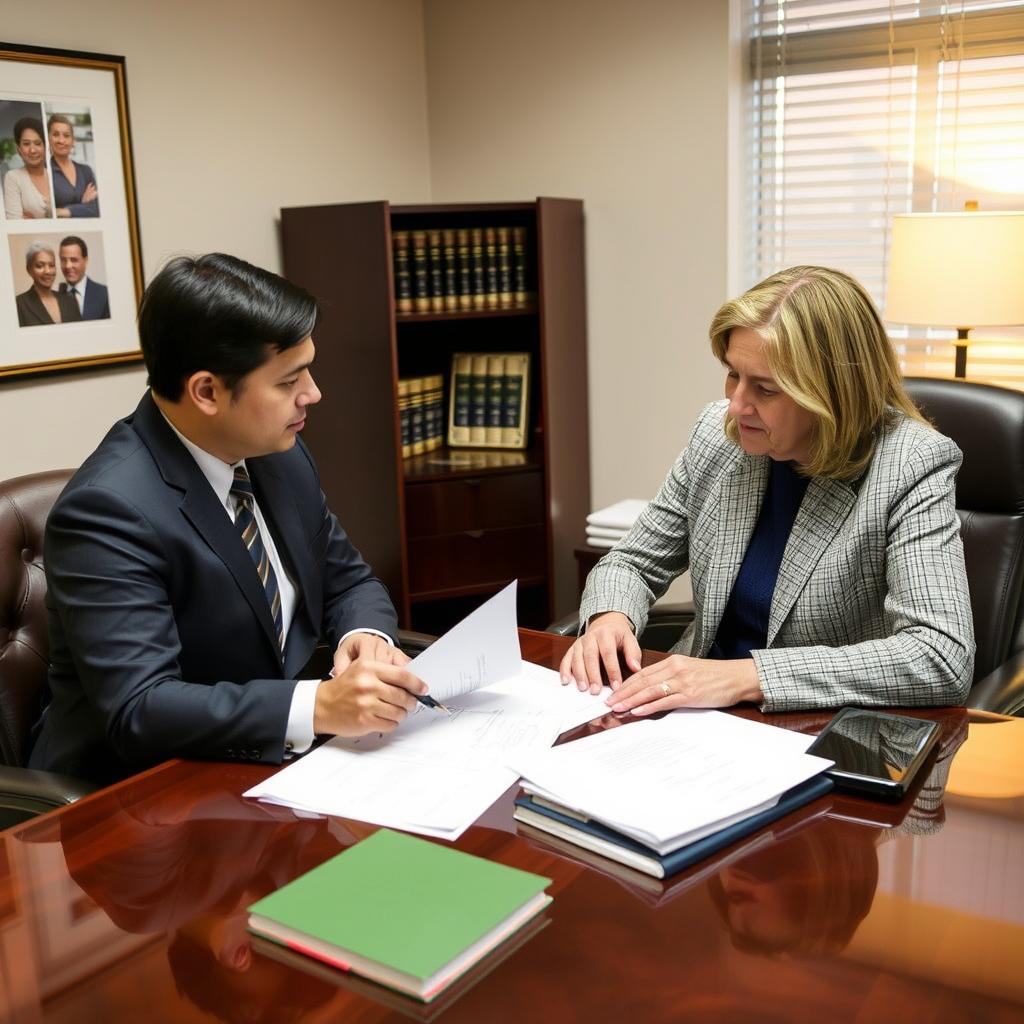
What is the difference between legal separation and divorce in District of Columbia
In the District of Columbia, divorce ends a marriage permanently, while legal separation is not a separate court‑ordered status. Instead, a couple may choose to live apart and formalize their arrangement through a separation agreement. That agreement can address property division, spousal support, and child‑related matters without dissolving the marriage. Mr. Sris and the firm’s Of Counsel attorneys help clients in Washington, D.C., choose the path that best fits their circumstances. To discuss your situation, reach Law Offices Of SRIS, P.C. at (888) 437‑7747. Law Offices Of SRIS, P.C. – Advocacy Without Borders.
Understanding the Key Differences in D.C. Family Law
The District of Columbia does not have a statutory “legal separation” proceeding that a court can decree while keeping the marriage intact. Under current D.C. Law — which changed significantly with Elaine’s Law, effective January 26, 2024 — divorce is granted simply because one or both spouses assert they no longer wish to remain married. No separation period is required, and fault grounds no longer exist in the District. Divorce therefore permanently terminates the marriage, allowing each party to remarry and ending certain legal obligations that attach to the marital relationship.
By contrast, a couple who wants to formalize living apart without ending the marriage may execute a written separation agreement. This agreement can resolve the same issues a divorce would address — division of property, spousal support, custody, and parenting time — but the parties remain legally married. A separation agreement in D.C. Is a contract between the spouses that becomes binding when properly drafted and signed. It does not require court approval, though it can later be incorporated into a divorce decree if the marriage ultimately ends.
Many clients in neighborhoods throughout the District — from Capitol Hill to Columbia Heights, Georgetown to Anacostia — choose a separation agreement because they are not ready for divorce, need to maintain health insurance coverage, or have personal or religious reasons for staying married. Mr. Sris and the firm’s Of Counsel attorneys can explain how a separation agreement interacts with D.C. Superior Court procedures and help you decide whether negotiating an agreement or moving forward with divorce is the better strategic choice for your family.
Frequently Asked Questions
Does D.C. Recognize legal separation as a formal court proceeding?
No, the District of Columbia does not offer a court‑ordered legal separation that maintains the marriage. The court will either grant a divorce, dissolving the marriage, or decline to grant one. Couples who want to live apart while remaining married must use a separation agreement — a private contract — to define their rights and responsibilities. That agreement can be comprehensive, covering all issues that a divorce would, but it does not involve a judge issuing a separation decree.
Can a separation agreement be turned into a divorce later?
Yes, a D.C. Separation agreement may later be incorporated into a divorce decree if the couple decides to end the marriage. Under D.C. Code § 16‑904, after the change brought by Elaine’s Law, a divorce can be granted without any separation period once one party asserts the marriage is over. If an agreement already exists, the court can merge it into the divorce judgment, making its terms enforceable as a court order rather than merely a contract.
What issues can a D.C. Separation agreement address?
A separation agreement in the District of Columbia can address all matters a divorce would, including property division, spousal support, child custody, parenting time, and child support. The agreement can also resolve who remains in the family home and how existing debts will be paid. Because D.C. Follows equitable distribution, the division of property must be fair but not necessarily equal, and a well‑drafted agreement can give the parties more control than a judge would have.
How does a separation agreement affect property rights in D.C.?
In D.C., a separation agreement can determine how marital property is classified and distributed while the marriage continues. Absent an agreement, the default equitable‑distribution rules will apply when a divorce is filed. By signing a separation agreement, spouses can lock in a property arrangement early, avoiding the uncertainty of litigation. The agreement can also address separate property, protecting pre‑marital assets from division.
Will a separation agreement protect me if my spouse later files for divorce?
A properly drafted D.C. Separation agreement is a binding contract that a court will generally enforce during a subsequent divorce. While a judge might review certain provisions — especially those involving child support or custody — to ensure they are in the child’s best interests, property and spousal‑support terms that are fair and voluntarily made will typically be upheld. Having an agreement already in place often streamlines the divorce process.
Does a separation agreement affect child custody or support in D.C.?
A separation agreement may include custody, parenting‑time, and child‑support provisions, but the court always retains authority to modify those terms to serve the child’s best interests. Even if both parents agree, a judge will examine whether the arrangement meets the statutory factors under D.C. Law. An agreement that reflects a thoughtful parenting plan, however, is given substantial weight.
Is there a waiting period before a D.C. Divorce can be finalized?
No, under current D.C. Law there is no mandatory waiting period for a divorce. Since Elaine’s Law eliminated the prior separation‑period requirement, a divorce can be granted as soon as the court is satisfied that the marriage is irretrievably broken and both parties have been served or have waived service. The timeline depends on the court’s schedule and the complexity of the case, not on a statutory waiting period.
Do I need an attorney for a D.C. Separation agreement or divorce?
While you are not legally required to have an attorney, D.C. Family law involves important rights that can be permanently affected by an agreement or a divorce decree. An experienced attorney can help ensure that the agreement is comprehensive, enforceable, and fair, and can identify issues you might not anticipate. Mr. Sris and the firm’s Of Counsel attorneys practice family law in the District and can assist whether you are considering a separation agreement, negotiating the terms of a divorce, or litigating a contested matter.
For guidance on your specific situation, reach Law Offices Of SRIS, P.C. at (888) 437‑7747.
About Mr. Sris and the Firm’s Of Counsel Attorneys
Mr. Sris, Owner and Founder of Law Offices Of SRIS, P.C., is a former prosecutor who has practiced law since 1997. He is admitted in Virginia, Maryland, the District of Columbia, New Jersey, and New York. Mr. Sris testified before the Virginia House Courts of Justice Committee in support of 2019 HB 635 (chief patron Del. David Bulova), and he brings a disciplined, detail‑oriented approach to family law matters including separation agreements and divorce proceedings. The firm’s Of Counsel attorneys contribute extensive experience in family law, civil litigation, and negotiation, and they appear regularly in D.C. Superior Court. Together, Mr. Sris and the firm’s Of Counsel attorneys work to reach efficient, well‑structured resolutions for clients throughout the District.
Attorney advertising. Prior results do not guarantee a similar outcome.
Case results depend on a variety of factors unique to each case.